
Blown-in insulation in Wichita Falls TX - even coverage packed into every corner
Hot upstairs rooms, drafty walls or a power bill that keeps climbing? We seal the gaps first, then blow insulation in firm and even.
- Fully licensed and insured.
- Free in-person estimates.
- Replies within 1 business day.
Is blown-in insulation the right fix for your attic or walls?
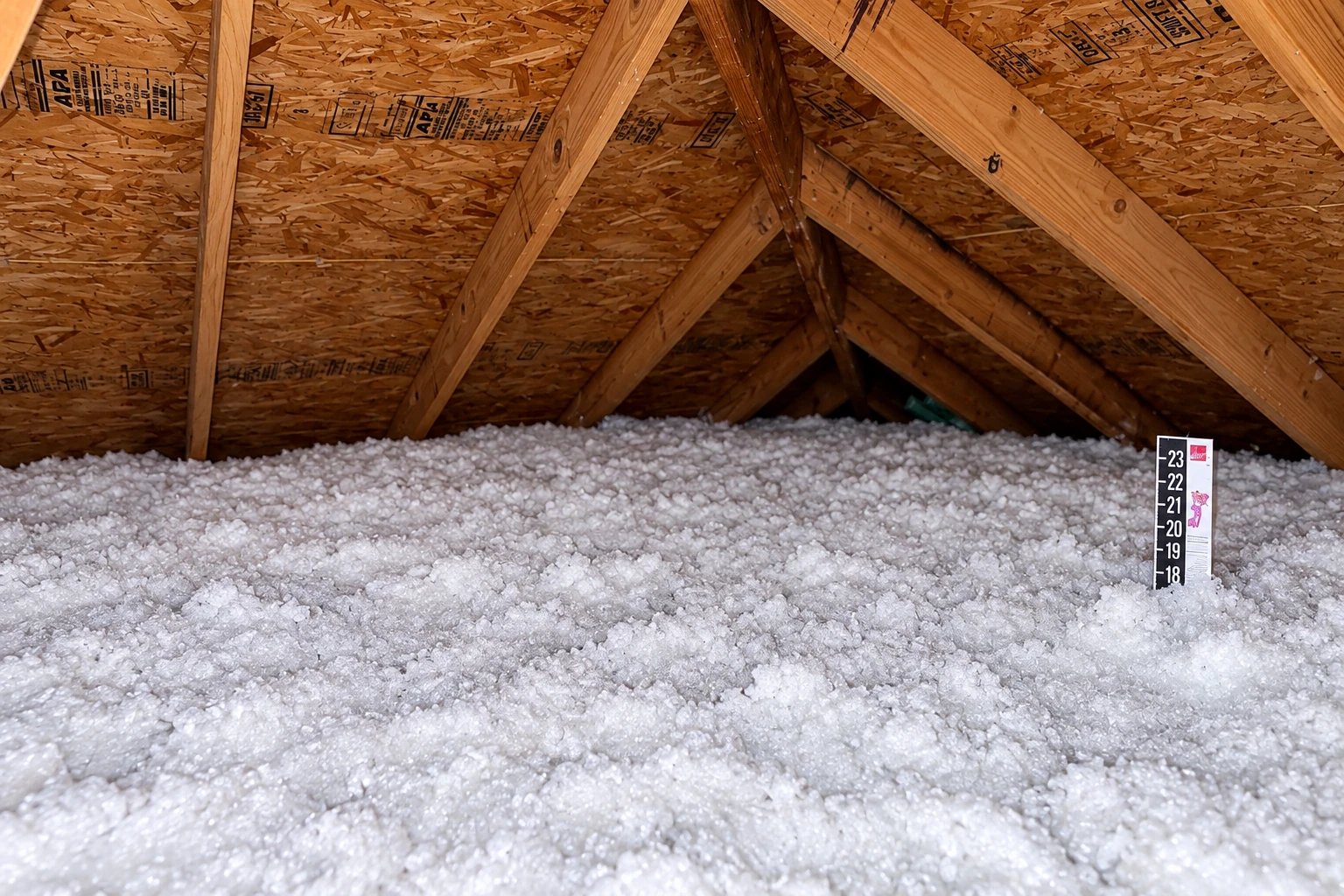
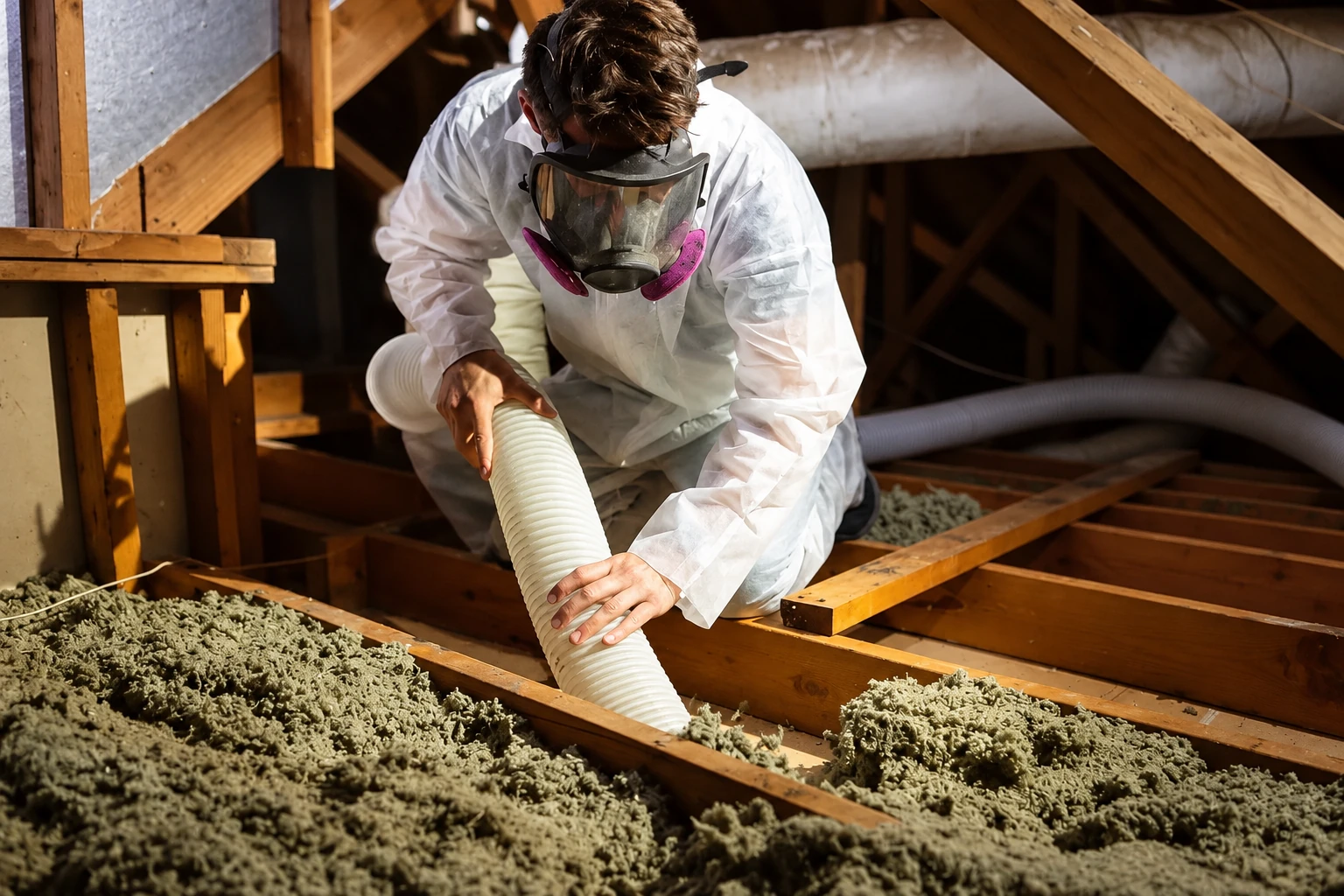
Blown-in insulation is loose fiberglass or cellulose blown through a hose onto your attic floor or into closed walls. In Wichita Falls homes, it's the easiest way to fill odd-shaped spaces and the gaps around pipes and framing that rolls of insulation can't reach. Packed in tight, it also slows the air moving through those spaces, so the rooms below hold their temperature better.
Most folks who call me have an upstairs that won't cool down, a room over the garage nobody wants to sit in, or an older house they just bought with a few tired inches of insulation up top. The price moves with how much attic floor or wall we're covering, what's already up there and whether it has to come out first, and how many gaps need sealing before anything gets blown in. The schedule turns mostly on that prep work and on anything I find with the venting or wiring, and if leaks turn out to be a bigger problem than thin insulation, attic air sealing may need to come first. After I look it over, you get a plain-words write-up of what I found and what we'd do, so you know what you're looking at before you decide.
How do you know your house needs more insulation?
Upstairs rooms that won't cool
The thermostat says one thing and the bedrooms upstairs say another, or the room over the garage stays miserable no matter what you set it to. That usually means the attic floor is thin or full of gaps, and every month you wait, the AC keeps working hard to cool air that's slipping up into the attic.
Joists showing above the insulation
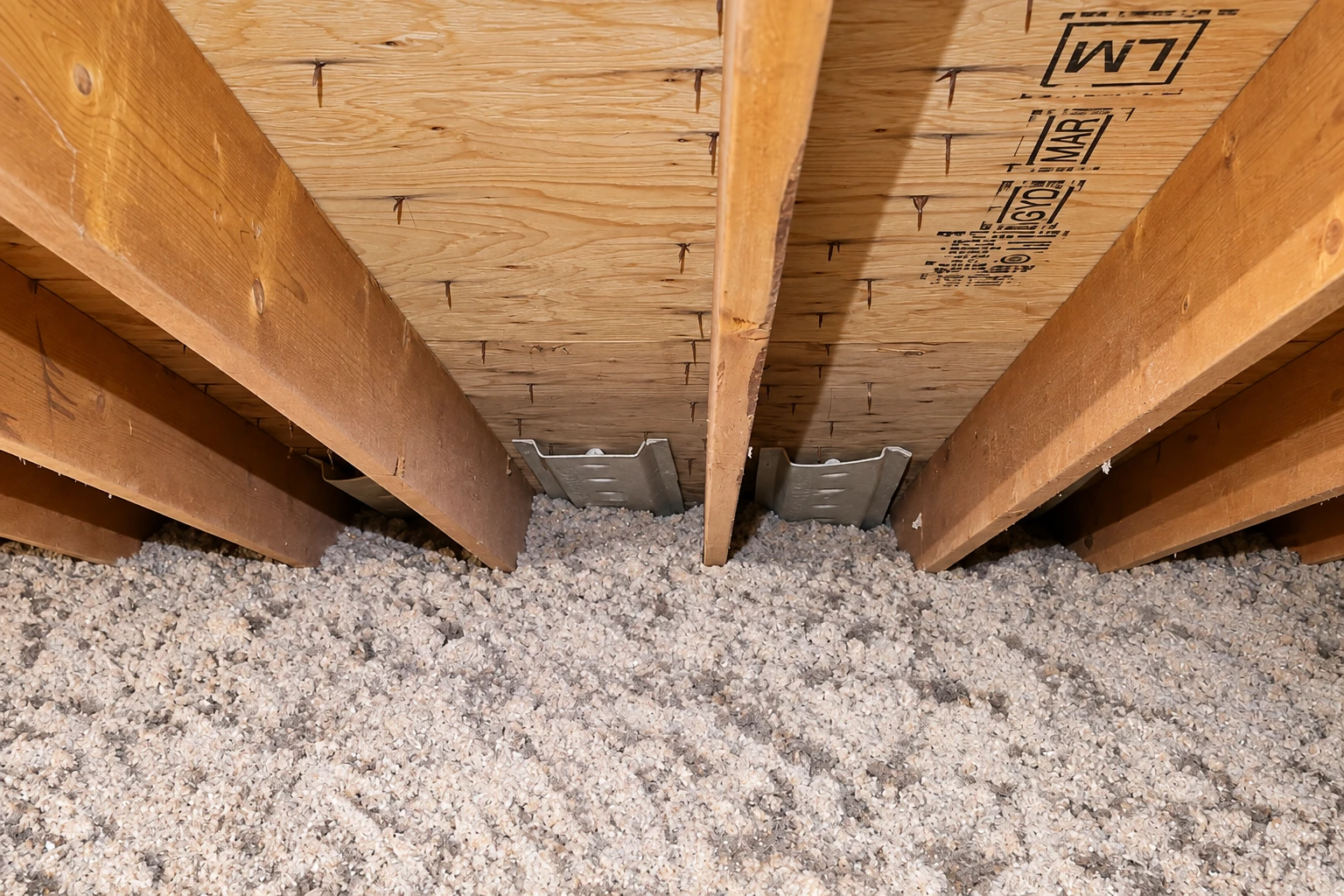
Poke your head through the attic hatch, and if you can see the tops of the ceiling joists, which are the wooden beams the drywall hangs from, the insulation has settled or was never deep enough. Thin spots near the edges are common too, and they let heat through no matter how deep the middle is.
Stained, matted or smelly insulation
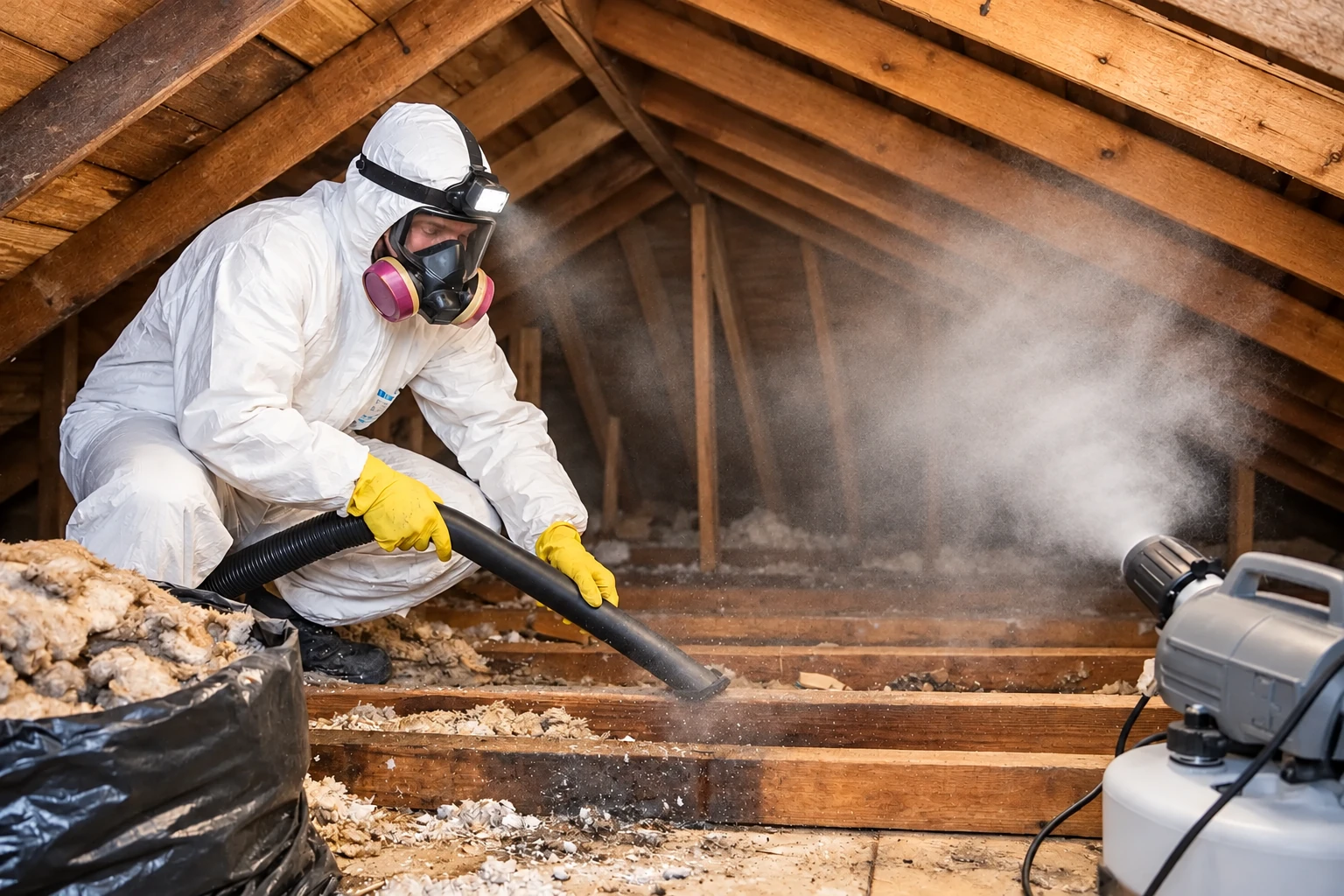
Dark streaks, clumps that look wet, droppings or a musty smell mean water or critters got in at some point. Blowing new material on top just buries that problem, and the longer it sits, the more the framing around it can suffer.
How we put in blown-in insulation
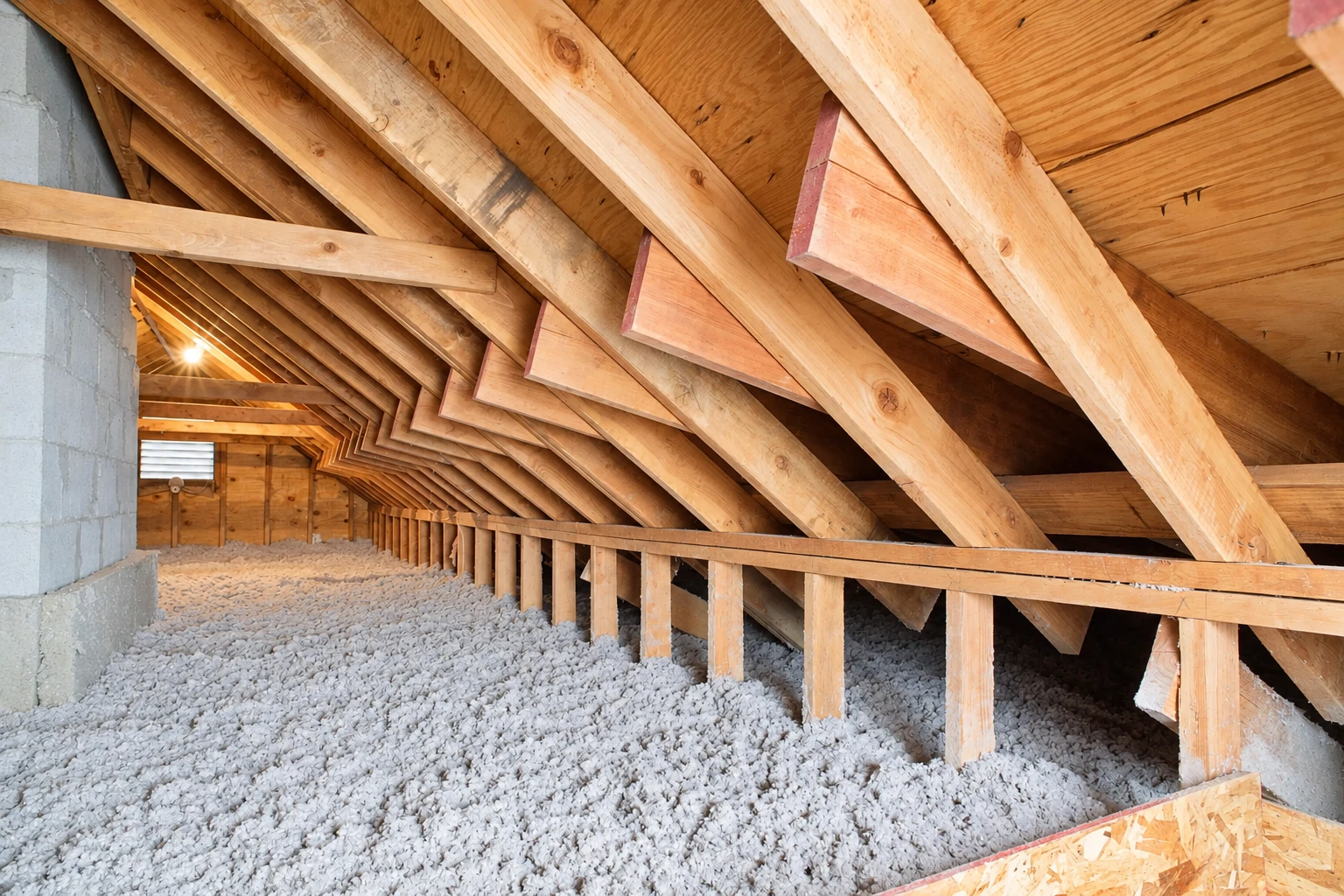
Here's how I run it. First we sort out where the insulation is going, the attic floor or closed walls, and I check how your furnace and water heater get rid of their exhaust, because a gravity-vented unit, one whose exhaust rises up the flue on its own, needs enough air to burn its fuel. Federal guidance from 2013 says those homes need that air or a switch to power-vent or direct-vent equipment. Then our crew seals the gaps around pipes, wires and the attic hatch and sets baffles, which are guards at the roof edge that keep the eave vents open. We blow the insulation in at an even depth from wall to wall and pack it in firm, so it fills every corner and stays put instead of settling into bare spots you'd never see from the hallway.
Sometimes the attic is only one piece of it. If what's up there now is soaked or full of droppings, we do the insulation removal first, so the new layer starts clean. If the drafts go past the attic into walls and floors, our home insulation work looks at the whole house, so you're fixing the right spot first.
Attic floor top-up
This suits most houses that already have some insulation up there and an attic we can move around in. Sealing the gaps and topping up with loose fill usually costs less than foam and does the job, so that's what I'd pick unless your ductwork runs through the attic, where spray foam can earn its higher price by sealing and insulating in one pass.
Dense-pack for closed walls
This suits older houses with empty or half-filled outside walls you don't want to tear open. We dense-pack them, blowing the material in through small holes until each space is packed tight, so it fills the whole wall, doesn't settle and slows the air moving through it.
Find out what your attic and walls need, in plain words
Send the form and we'll get back to you within one business day to set a time. The visit is free, I come out myself to look things over, and there's no obligation to book once you've seen what I found.
(940) 298-1123Permits and older houses for blown-in insulation in Wichita Falls
In Wichita Falls, Building Inspections issues permits and inspects construction for code, and the city requires the correct permits for construction work inside the city. I won't guess whether your attic or wall job needs one, so we check with the city before we start, and when a job calls for a permit, we handle the paperwork and the inspections for you.
Around here we go into a lot of older houses with a thin, uneven layer left from years back, rooms over garages that never got enough, and furnaces or water heaters sitting right up in the attic, which is why the venting check comes before anything else. We're based in Wichita Falls and run into the same kinds of attics on jobs in Burkburnett, Iowa Park and the cities around them.
What happens after you call about blown-in insulation
Call or send a message
Reach us at (940) 298-1123 or through the form, and let us know if it's the attic, the walls or both. We'll set a time for me to come out.
I look the house over
I come out myself, get up in the attic, check the walls or crawl space, and walk you through what I found and what I'd take care of first. You get it written up in plain words, so you can see what's driving the cost before you commit to anything.
We check permits and prep
Once you say go, we check with the city on permits, and its Building Inspections office keeps weekday hours, 8 a.m. to 5 p.m., so any permit or inspection runs on that schedule. Then we cover your floors and protect the house before anything goes up the ladder.
Seal, insulate and walk through
We do the sealing and any repairs first, then blow in the insulation. When we're done, I walk the finished job with you so you know what's up there and why.
Frequently asked questions
How much does blown-in insulation cost in Wichita Falls?
The cost comes down to how much attic or wall we're covering, what has to come out first and how much sealing your house needs. One insulation maker's 2013 fact sheet says the right amount depends mainly on climate, that buying too much costs more than it saves on fuel, and that savings depend on the house, the insulation already there and how much fuel you use. So more isn't automatically better, and I'll write up what your house actually needs after I see it.
Should my attic be sealed before blown-in insulation goes in?
Yes. Federal guidance for existing vented attics says to seal the openings in the attic floor first and then add insulation, because sealing saves energy, lowers fuel bills and helps prevent moisture problems in the attic. We do the air sealing, which means closing those gaps, as part of the same job, since air leaking through gaps around lights, pipes and the hatch would just blow right through the new insulation.
Is cellulose or fiberglass better for blown-in insulation?
Fiberglass holds up better to water, because cellulose breaks down when it gets soaked and fiberglass isn't permanently damaged by it. Fiberglass is also the lighter of the two. If your roof has ever leaked or the attic has had moisture trouble, that difference is worth weighing, and I'm happy to talk it through at the visit.
Who issues permits and licenses contractors in Wichita Falls?
The city's Building Inspections office does both. It issues permits, licenses and registers contractors, and inspects work for code, and the city requires the correct permits and licenses for construction work in Wichita Falls. We check with that office before we start, so you don't have to chase it down.
How do I insulate existing walls without tearing them open?
You blow insulation in through small access holes and pack each wall space tight, so the walls stay up. Once the walls are filled, the holes get patched or covered with chair rail, a strip of trim run along the wall, and you can pick which finish suits each room.
How do I know if insulation can go over my recessed lights?
Check whether the fixture has an IC rating, short for insulation contact, which means it's built to be covered. Cellulose industry practice keeps heaters and recessed lights uncovered unless they carry that rating, so I look at each can light before we blow anything in, and you can ask me which of yours are rated.
Wichita Falls, TX
Find out what's up in your attic
If you can tell us whether it's the attic or the walls, how your furnace and water heater vent, and where any recessed lights sit, I can plan the visit around what matters most in your house.